All content on this site is intended for healthcare professionals only. By acknowledging this message and accessing the information on this website you are confirming that you are a healthcare professional. If you are a patient or carer, please visit the Lymphoma Coalition.
The Lymphoma Hub website uses a third-party service provided by Google that dynamically translates web content. Translations are machine generated, so may not be an exact or complete translation, and the Lymphoma Hub cannot guarantee the accuracy of translated content. The Lymphoma Hub and its employees will not be liable for any direct, indirect, or consequential damages (even if foreseeable) resulting from use of the Google Translate feature. For further support with Google Translate, visit Google Translate Help.


The Lymphoma Hub is an independent medical education platform, sponsored by Roche, AbbVie, BeOne, Miltenyi Biomedicine, Thermo Fisher, Nurix Therapeutics and Caribou Biosciences and supported through independent educational grants from Incyte, Bristol Myers Squibb, Pfizer and Takeda Pharmaceuticals U.S.A., Inc. Funders are allowed no direct influence on our content. The levels of sponsorship listed are reflective of the amount of funding given. View funders.
Now you can support HCPs in making informed decisions for their patients
Your contribution helps us continuously deliver expertly curated content to HCPs worldwide. You will also have the opportunity to make a content suggestion for consideration and receive updates on the impact contributions are making to our content.
Find out more
Create an account to access:
Bookmark & personalize site content
Receive alerts for new content in your areas of interest
View lymphoma & CLL content recommended for you
EHA-SWG 2017 | Rare Lymphomas: The role of the microenvironment in CLL and rare lymphomas
On March 10th, at the EHA-SWG Rare Lymphomas Scientific Meeting 2017 in Barcelona, Spain, Martin Dreyling chaired a session on Lymphoma Biology. The second presentation of this session was by Marcel Spaargaren, of the Academic Medical Center, Amsterdam, The Netherlands, on the topic of ‘The Role of the Microenvironment’. A summary of the data presented and discussed are detailed below:
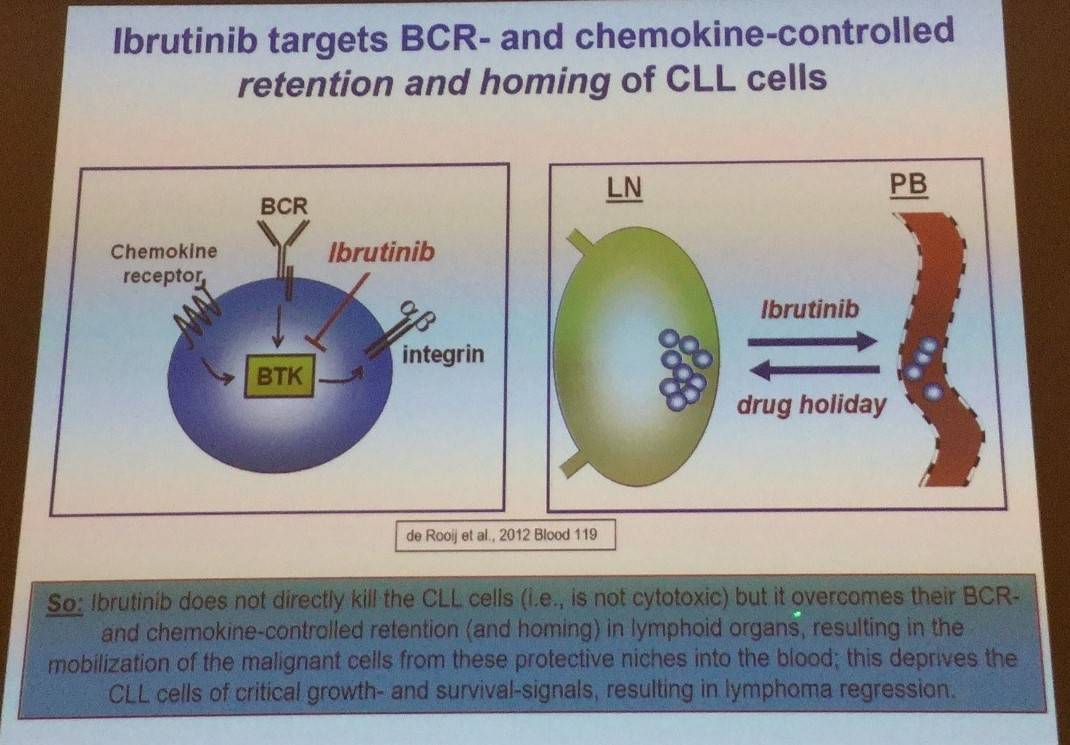
- Using ibrutinib in CLL resulted in transient increase in lymphocytosis in a saw-tooth like pattern
- Data suggested no direct killing of CLL cells, indicating that CLL cells are mobilized out of tumor and then killed
- Ibrutinib inhibits BTK-mediated control of integrin-mediated and cytokine-controlled adhesion and migration in primary CLL cells
- The four-week on, one week off regimen aids this process vs. continuous treatment
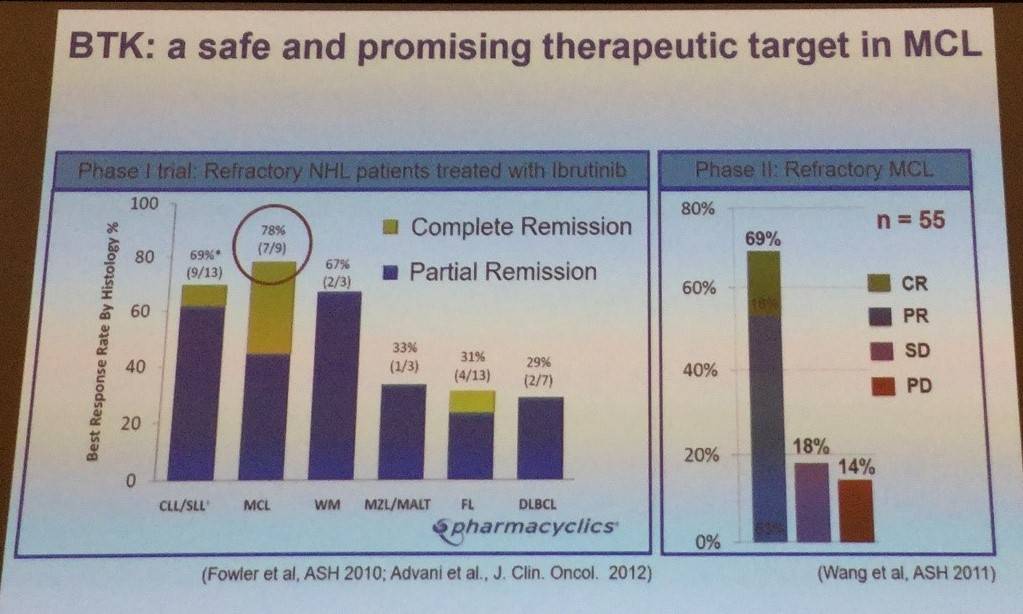
- Similar data are seen in MCL and WM (in terms of PR)
- Ibrutinib resistance was seen in ~30% CLL and MCL patients, 15% of resistance due to mutations in BTK and PLCγ2
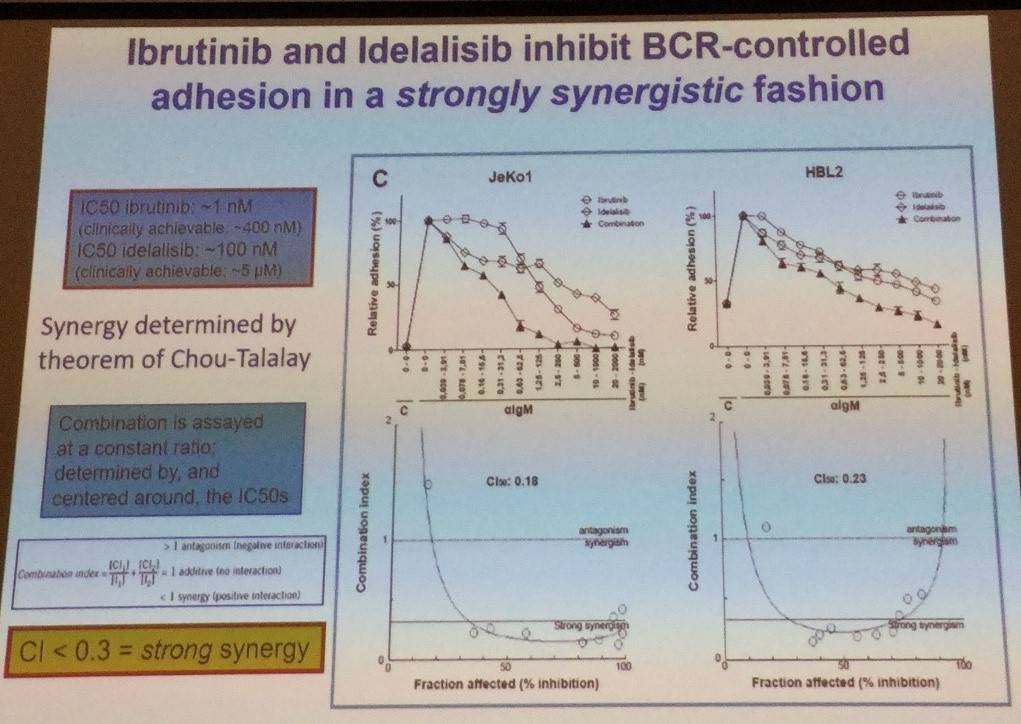
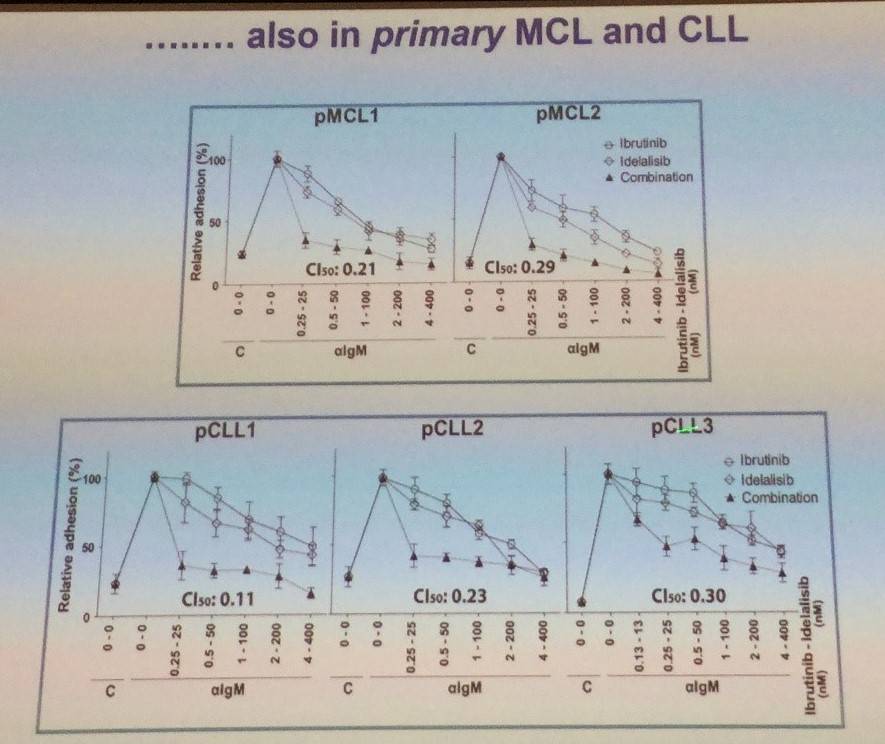
- Combination therapy with ibrutinib and idelalisib, a PI3K inhibitor, may help prevent resistance, as seen in the data presented
- However, in WM, lower efficacy was seen only in patients with CXCR4 gain-of-function mutations (Treon et al., 2015. NEJM) possibly indicating that CXCR4 mediated adhesion is important in WM
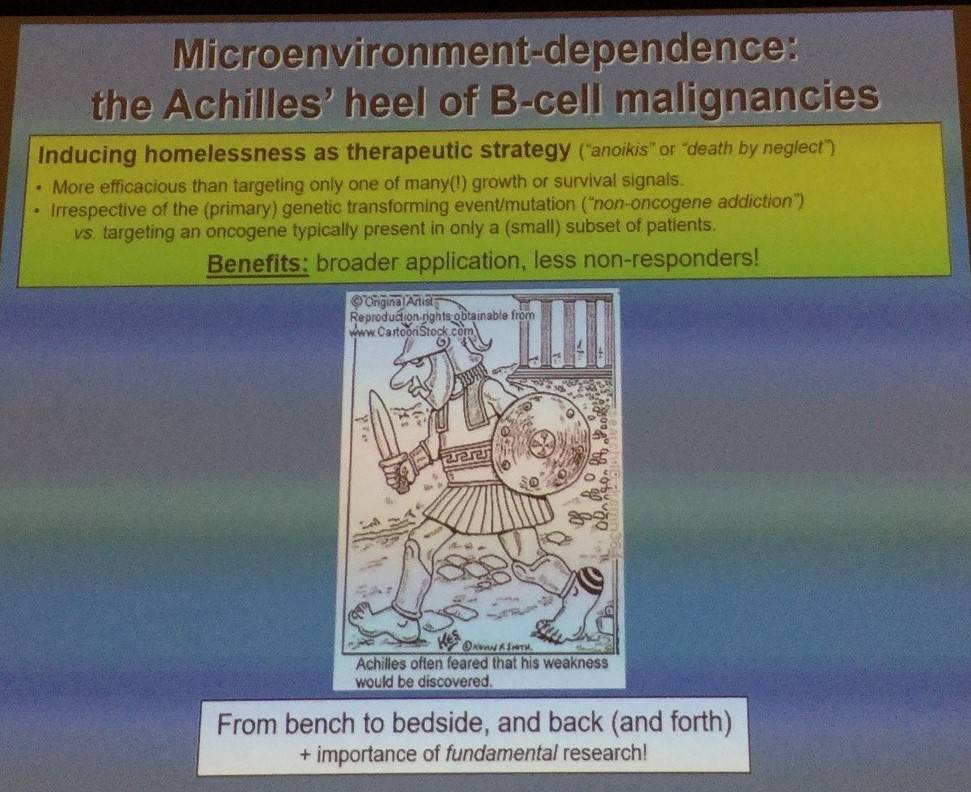
In summary, Marcel Spaargaren stated that inducing anoikis in these malignancies is a broad strategy that may result in fewer non-responders due to it not relying on a single growth or survival signal. Therefore, exploiting the relationship between the tumor microenvironment and lymphoma cells was stated as being the ‘Achilles’ heel’ of lymphoma.
References
- Spaargaren M. The Role of the Microenvironment. 2017 Mar 10. EHA-SWG Rare Lymphomas. Barcelona, Spain.
Please indicate your level of agreement with the following statements:
The content was clear and easy to understand
The content addressed the learning objectives
The content was relevant to my practice
I will change my clinical practice as a result of this content
This content is accurate as of the date of publication and is not updated retrospectively. Please refer to the latest available evidence, guidelines, and relevant regulatory information when making clinical decisions.
Your opinion matters
When selecting the next therapy for patients with R/R MCL after BTKi progression, what is your most important consideration?