All content on this site is intended for healthcare professionals only. By acknowledging this message and accessing the information on this website you are confirming that you are a healthcare professional. If you are a patient or carer, please visit the Lymphoma Coalition.
The Lymphoma Hub website uses a third-party service provided by Google that dynamically translates web content. Translations are machine generated, so may not be an exact or complete translation, and the Lymphoma Hub cannot guarantee the accuracy of translated content. The Lymphoma Hub and its employees will not be liable for any direct, indirect, or consequential damages (even if foreseeable) resulting from use of the Google Translate feature. For further support with Google Translate, visit Google Translate Help.


The Lymphoma Hub is an independent medical education platform, sponsored by Roche, AbbVie, BeOne, Miltenyi Biomedicine, Thermo Fisher, Nurix Therapeutics and Caribou Biosciences and supported through independent educational grants from Incyte, Bristol Myers Squibb, Pfizer and Takeda Pharmaceuticals U.S.A., Inc. Funders are allowed no direct influence on our content. The levels of sponsorship listed are reflective of the amount of funding given. View funders.
Now you can support HCPs in making informed decisions for their patients
Your contribution helps us continuously deliver expertly curated content to HCPs worldwide. You will also have the opportunity to make a content suggestion for consideration and receive updates on the impact contributions are making to our content.
Find out more
Create an account to access:
Bookmark & personalize site content
Receive alerts for new content in your areas of interest
View lymphoma & CLL content recommended for you
The Lymphoma Hub will be at ASH 2016 – 2 weeks to go!
There are only 14 days left until the 58th Annual Meeting & Exposition of the American Society of Hematology (ASH).
For over 50 years, the ASH annual meeting has been considered the premier event for the exchange of scientific knowledge, specifically in the field of malignant and non-malignant hematology. This event is typically attended by more than 20,000 hematology professionals, from every speciality, and from across the globe making it the perfect opportunity to network with the top minds in the field. Each year, ASH receive over 5,000 abstracts for this event, of which over 3,000 pass the extensive peer review process and are accepted for poster and oral presentations. The highlight of the event is considered to be the Plenary Scientific Session where the top 6 abstracts, selected by the Program Committee, are presented and discussed.
The Lymphoma Hub had a fantastic few days reporting live from ASH 2015, held in Orlando. We had the opportunity to see a number of exciting abstract presentations which we reported and tweeted live each day. Exciting advancements in Lymphoma and Chronic Lymphocytic Leukemia presented in oral and poster abstract sessions at last year’s event included:
- Novel immunotherapy strategies in Lymphoma
- Biology of Hodgkin Lymphoma
- New drugs in non-Hodgkin Lymphoma
- Upfront therapy in Chronic Lymphocytic Leukemia
- Response-adapted therapy and new combinations in Hodgkin Lymphoma
- Diffuse Large B-Cell Lymphoma – Beyond R-CHOP
In addition, at last year’s event, the Lymphoma Hub interviewed top experts in the field of malignant hematology; we discussed results of the MCL3001 trial with Simon Rule, we speculated on the future role of R-CHOP for patients with Lymphoma with Jason Westin, and we asked Nathan Fowler his opinion on how ibrutinib could change the treatment and management of patients with Follicular Lymphoma.
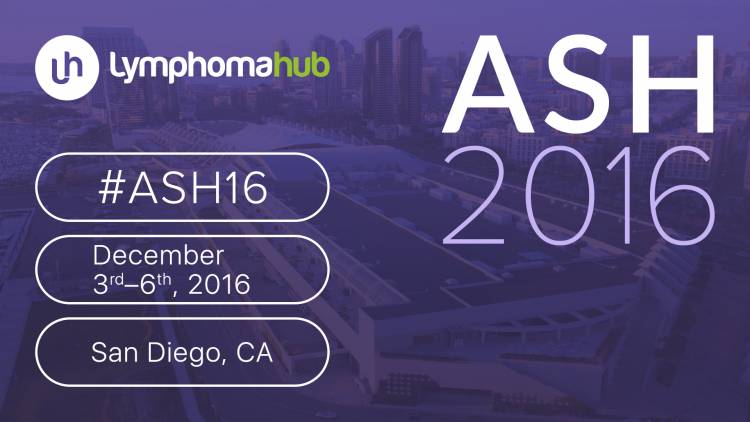
This year’s ASH Annual Meeting & Exposition is taking place at the San Diego Convention Center, California, from 3–6 December, and the Lymphoma Hub will be there. Be sure to visit the Lymphoma Hub for coverage of oral abstracts, educational sessions, and interviews with speakers and our Steering Committee members.
Please indicate your level of agreement with the following statements:
The content was clear and easy to understand
The content addressed the learning objectives
The content was relevant to my practice
I will change my clinical practice as a result of this content
This content is accurate as of the date of publication and is not updated retrospectively. Please refer to the latest available evidence, guidelines, and relevant regulatory information when making clinical decisions.
Your opinion matters
When selecting the next therapy for patients with R/R MCL after BTKi progression, what is your most important consideration?