All content on this site is intended for healthcare professionals only. By acknowledging this message and accessing the information on this website you are confirming that you are a healthcare professional. If you are a patient or carer, please visit the Lymphoma Coalition.
The Lymphoma Hub website uses a third-party service provided by Google that dynamically translates web content. Translations are machine generated, so may not be an exact or complete translation, and the Lymphoma Hub cannot guarantee the accuracy of translated content. The Lymphoma Hub and its employees will not be liable for any direct, indirect, or consequential damages (even if foreseeable) resulting from use of the Google Translate feature. For further support with Google Translate, visit Google Translate Help.


The Lymphoma Hub is an independent medical education platform, sponsored by Roche, AbbVie, BeOne, Miltenyi Biomedicine, Thermo Fisher, Nurix Therapeutics and Caribou Biosciences and supported through independent educational grants from Incyte, Bristol Myers Squibb, Pfizer and Takeda Pharmaceuticals U.S.A., Inc. Funders are allowed no direct influence on our content. The levels of sponsorship listed are reflective of the amount of funding given. View funders.
Now you can support HCPs in making informed decisions for their patients
Your contribution helps us continuously deliver expertly curated content to HCPs worldwide. You will also have the opportunity to make a content suggestion for consideration and receive updates on the impact contributions are making to our content.
Find out more
Create an account to access:
Bookmark & personalize site content
Receive alerts for new content in your areas of interest
View lymphoma & CLL content recommended for you
ASH 2025 | Outpatient administration of epcoritamab monotherapy for R/R DLBCL: Results from EPCORE NHL-6, by race and ethnicity
Featured:
 Adelba Torres
Do you know... What did the analysis of the EPCORE NHL-6 trial by race and ethnicity demonstrate about the efficacy and safety of epcoritamab?
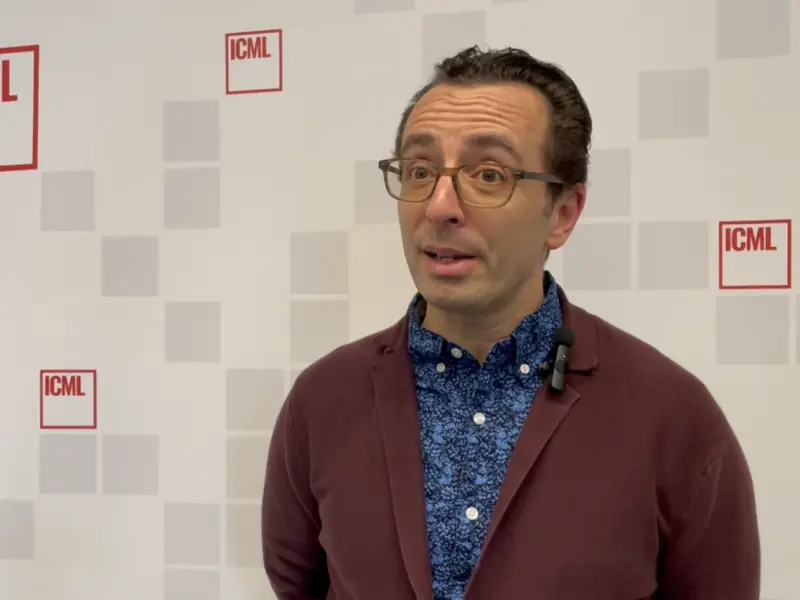
During the 67th American Society of Hematology (ASH) Annual Meeting and Exposition, December 6–9, 2025, Orlando, US, the Lymphoma Hub was pleased to speak with Adelba Torres, Hospital Auxilio Mutuo, San Juan, PR. We asked, What does the latest analysis of the phase II EPCORE NHL-6 trial (NCT05451810) tell us about the efficacy and safety of bispecific antibodies in an ethnically and racially diverse group of patients?
In this interview, Torres highlights how findings from the EPCORE NHL-6 trial support the safe and efficacious administration of subcutaneous epcoritamab in the outpatient setting in adult patients with relapsed/refractory diffuse large B-cell lymphoma (R/R DLBCL) and discusses efficacy and safety findings in an ethnically and racially diverse group of patients.
ASH 2025 | Outpatient administration of epcoritamab monotherapy for R/R DLBCL: Results from EPCORE NHL-6, by race and ethnicity
ASH 2025 | Outpatient administration of epcoritamab monotherapy for R/R DLBCL: Results from EPCORE NHL-6, by race and ethnicity
Key points1
- The primary endpoints for the phase II EPCORE NHL-6 trial are rates of Grade ≥3 cytokine release syndrome (CRS), immune cell-associated neurotoxicity syndrome (ICANS), and neurologic events. Secondary endpoints include responses assessed by investigators, per Lugano criteria, and efficacy and safety outcomes.
- 92 patients with R/R DLBCL were enrolled: 26 were Black/Hispanic, and 66 were White/Asian.
- Analysis by racial/ethnic subgroups demonstrate that CRS was reported in 38.5% of patients in the Black/Hispanic group (Grade 1, 15.4%; Grade 2, 23.1%) and 40.9% of patients in the White/Asian subgroup (Grade 1, 24.2%; Grade 2, 13.6%; Grade 3, 3.0%).
- ICANS occurred in 7.7% of patients in the Black/Hispanic group (all Grade 1) and 7.6% in the White/Asian group (Grade 1, 3.0%; Grade 2, 3.0%; Grade ≥3, 1.5%).
- CRS and ICANS incidence and severity were consistent across racial subgroups and with previous outpatient cohort data, as well as data from the pivotal phase I/II EPCORE NHL-1 trial (NCT03625037).
- The overall response rate was 61.5% (complete response [CR], 53.8%) in the Black/Hispanic group and 62.1% (CR, 37.9%) in the White/Asian group; with median duration of response being not reached (NR) (95% confidence interval [CI], 2.9–NR) and 15.2 months (95% CI, 4.4–NR), respectively.
- The median progression-free survival was NR (95% CI, 1.6 months–NR) in the Black/Hispanic group and 5.7 months (95% CI, 2.9–16.4) in the White/Asian group, with a median duration of study follow-up of 5.6 months (95% CI, 3.2–6.0) and 8.1 months (95% CI, 5.5–8.5), respectively.
- Currently, patients are typically hospitalized for the initial full-dose administration of epcoritamab and for 24 hours afterwards. These findings demonstrate that epcoritamab can be administered safely in the outpatient setting, and efficacy and safety are consistent across ethnic and racial subgroups.
This educational resource is independently supported by AbbVie. All content was developed by SES in collaboration with an expert steering committee. Funders were allowed no influence on the content of this resource.
References
Please indicate your level of agreement with the following statements:
The content was clear and easy to understand
The content addressed the learning objectives
The content was relevant to my practice
I will change my clinical practice as a result of this content
This content is accurate as of the date of publication and is not updated retrospectively. Please refer to the latest available evidence, guidelines, and relevant regulatory information when making clinical decisions.
Your opinion matters
When selecting the next therapy for patients with R/R MCL after BTKi progression, what is your most important consideration?