All content on this site is intended for healthcare professionals only. By acknowledging this message and accessing the information on this website you are confirming that you are a healthcare professional. If you are a patient or carer, please visit the Lymphoma Coalition.
The Lymphoma Hub website uses a third-party service provided by Google that dynamically translates web content. Translations are machine generated, so may not be an exact or complete translation, and the Lymphoma Hub cannot guarantee the accuracy of translated content. The Lymphoma Hub and its employees will not be liable for any direct, indirect, or consequential damages (even if foreseeable) resulting from use of the Google Translate feature. For further support with Google Translate, visit Google Translate Help.


The Lymphoma Hub is an independent medical education platform, sponsored by Roche, AbbVie, BeOne, Miltenyi Biomedicine, Thermo Fisher, Nurix Therapeutics and Caribou Biosciences and supported through independent educational grants from Incyte, Bristol Myers Squibb, Pfizer and Takeda Pharmaceuticals U.S.A., Inc. Funders are allowed no direct influence on our content. The levels of sponsorship listed are reflective of the amount of funding given. View funders.
Now you can support HCPs in making informed decisions for their patients
Your contribution helps us continuously deliver expertly curated content to HCPs worldwide. You will also have the opportunity to make a content suggestion for consideration and receive updates on the impact contributions are making to our content.
Find out more
Create an account to access:
Bookmark & personalize site content
Receive alerts for new content in your areas of interest
View lymphoma & CLL content recommended for you
Symposium |Optimizing chronic lymphocytic leukemia management in a changing landscape
Featured:
 Francesc Bosch
Do you know... According to the EHA guidelines on the management of CLL, when should treatment be initiated?
On June 22, 2026, the Lymphoma Hub held a virtual symposium, titled Optimizing treatment for chronic lymphocytic leukemia with BTK inhibitors. During the symposium, Lymphoma Hub Steering Committee member Francesc Bosch, Vall d'Hebron Barcelona Hospital Campus, Barcelona, ES, led a case-based presentation and panel discussion on optimizing chronic lymphocytic leukemia (CLL) management in a changing landscape.
Symposium | Optimizing chronic lymphocytic leukemia management in a changing landscape
Symposium |Optimizing chronic lymphocytic leukemia management in a changing landscape
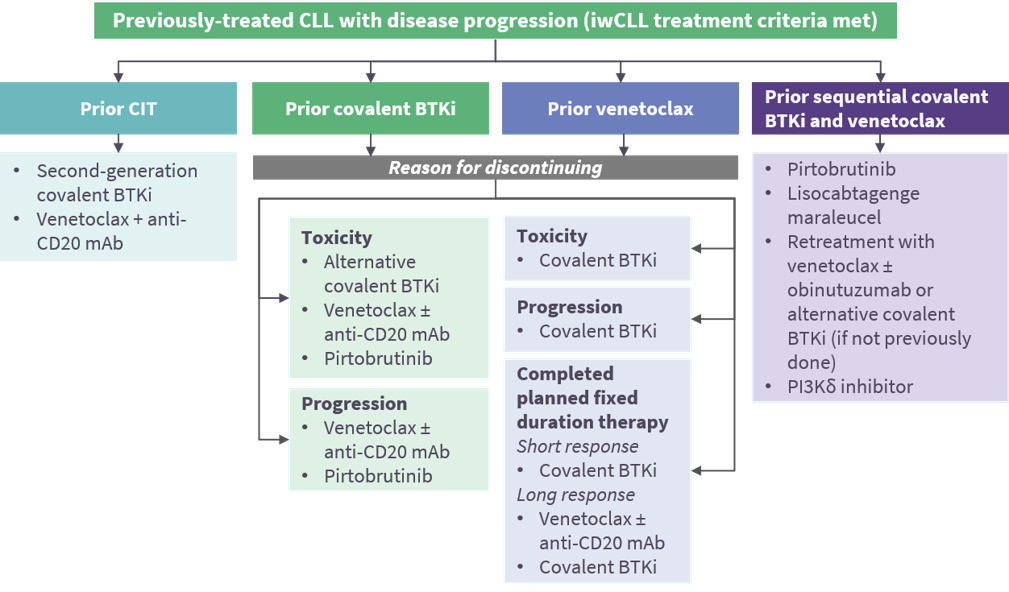
During his presentation, Bosch highlights current treatment guidelines for the management of patients with first-line (Figure 1) and relapsed/refractory (R/R; Figure 2) CLL. He also discusses three patient cases and the factors influencing treatment decisions specific to each case. Bosch then chairs a panel discussion featuring Susan O’Brien, University of California Irvine, US; Farrukh Awan, University of Texas Southwestern Medical Center, Dallas, US; and Gilles Salles, Memorial Sloan Kettering Cancer Center, New York, US, covering key aspects of optimizing CLL management.
Figure 1. Considerations for the first-line management of CLL*
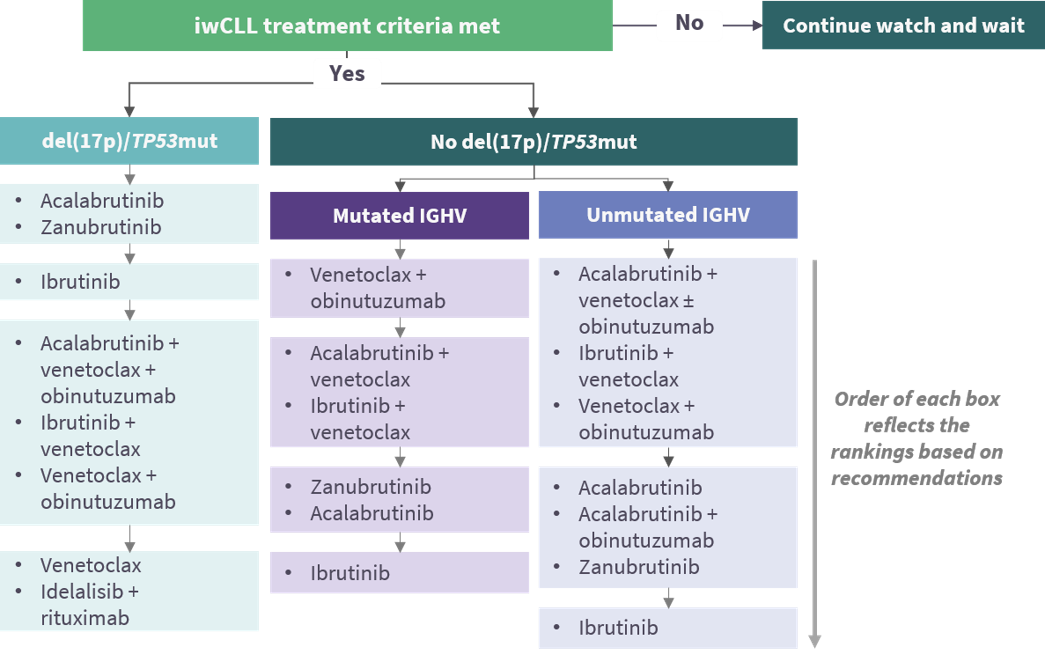
Figure 2. Considerations for the management of R/R CLL*
Key points
Treatment initiation should be based on the presence of active disease, as defined by the International Workshop on Chronic Lymphocytic Leukemia (iwCLL) criteria.1
Early treatment is not indicated, even in patients with high-risk disease, due to the lack of overall survival benefit.7
Key factors to consider when choosing a first-line therapy include TP53 aberrations and IGHV mutational status.1
Given the availability of multiple, similarly effective agents for treatment‐naive CLL, treatment selection should be guided by a range of factors beyond drug efficacy alone, such as patient preference, comorbidities, treatment goals, and logistical considerations.1
The choice of treatment in R/R CLL is influenced by the type of prior therapy and the reason for treatment discontinuation (progression vs intolerance).1
Time‐limited targeted therapies should be preferred over continuous therapy in patients with CLL without TP53 aberrations, while continuous treatment is suggested over time‐limited treatment in patients with TP53 aberrations, unless time‐limited treatment is preferred by shared decision‐making.1
The optimal treatment duration and the potential role of measurable residual disease (MRD)-guided treatment are areas of ongoing investigation.7
The optimal sequencing of non-covalent Bruton’s tyrosine kinase inhibitors (BTKis) warrants further evaluation, as the use of covalent BTKis and/or venetoclax-based therapy after non-covalent BTKis has not been prospectively studied.8
Pirtobrutinib may be a reasonable first-line continuous treatment option for older patients with CLL and comorbidities, given its favorable tolerability and the lower likelihood that multiple subsequent lines of therapy will be needed in this population.8
This educational resource is independently supported by Eli Lilly and Company. All content is developed by SES in collaboration with an expert steering committee. Funders are allowed no influence.
References
- Eichhorst B, Ghia P, Bosch F, et al. EHA Guidelines on management of chronic lymphocytic leukemia and Richter transformation. Hemasphere. 2026;10(6):e70403. DOI: 10.1002/hem3.70403
- Walewska R, Eyre TA, Bloor A, et al. 2025 British Society for Haematology Guideline for the treatment of chronic lymphocytic leukaemia. Br J Haematol. 2025;207(6):2296-2313. DOI: 10.1111/bjh.70100
- Hampel PJ, Parikh SA. Chronic lymphocytic leukemia treatment algorithm 2022. Blood Cancer J. 2022;12(11):161. DOI: 10.1038/s41408-022-00756-9
- Soumerai JD, Barrientos J, Ahn I, et al. Consensus recommendations from the 2024 Lymphoma Research Foundation workshop on treatment selection and sequencing in CLL or SLL. Blood Adv. 2025;9(5):1213-1229. DOI: 10.1182/bloodadvances.2024014474
- Pirtobrutinib. Prescribing Information (FDA). 2023. Revised 2025.
- Pirtobrutinib. Summary of Product Characteristic (EMA). 2023. Updated 2025.
- Niemann CU, Varghese A, Munir T, et al. When and how long to treat chronic lymphocytic leukemia? Am Soc Clin Oncol Educ Book. 2025;45(3):e473656. DOI: 10.1200/EDBK-25-473656
- Davids MS. BRUIN 313 and 314 trials open the door for noncovalent Bruton tyrosine kinase inhibition as initial therapy for chronic lymphocytic leukemia. J Clin Oncol. 2026;44(6):435-439. DOI: 10.1200/JCO-25-02691
Please indicate your level of agreement with the following statements:
The content was clear and easy to understand
The content addressed the learning objectives
The content was relevant to my practice
I will change my clinical practice as a result of this content
This content is accurate as of the date of publication and is not updated retrospectively. Please refer to the latest available evidence, guidelines, and relevant regulatory information when making clinical decisions.
More from this series:
Symposium | Optimizing treatment for chronic lymphocytic leukemia with BTK inhibitors

Your opinion matters
When selecting the next therapy for patients with R/R MCL after BTKi progression, what is your most important consideration?