All content on this site is intended for healthcare professionals only. By acknowledging this message and accessing the information on this website you are confirming that you are a healthcare professional. If you are a patient or carer, please visit the Lymphoma Coalition.
The Lymphoma Hub website uses a third-party service provided by Google that dynamically translates web content. Translations are machine generated, so may not be an exact or complete translation, and the Lymphoma Hub cannot guarantee the accuracy of translated content. The Lymphoma Hub and its employees will not be liable for any direct, indirect, or consequential damages (even if foreseeable) resulting from use of the Google Translate feature. For further support with Google Translate, visit Google Translate Help.


The Lymphoma Hub is an independent medical education platform, sponsored by Roche, AbbVie, BeOne, Miltenyi Biomedicine, Thermo Fisher, Nurix Therapeutics and Caribou Biosciences and supported through independent educational grants from Incyte, Bristol Myers Squibb, Pfizer and Takeda Pharmaceuticals U.S.A., Inc. Funders are allowed no direct influence on our content. The levels of sponsorship listed are reflective of the amount of funding given. View funders.
Now you can support HCPs in making informed decisions for their patients
Your contribution helps us continuously deliver expertly curated content to HCPs worldwide. You will also have the opportunity to make a content suggestion for consideration and receive updates on the impact contributions are making to our content.
Find out more
Create an account to access:
Bookmark & personalize site content
Receive alerts for new content in your areas of interest
View lymphoma & CLL content recommended for you
Symposium | BTK inhibitors in practice: Treatment selection and emerging clinical evidence
Featured:
 Farrukh Awan
Do you know... In a subgroup analysis of the phase III BRUIN CLL-322 study, which of the following statements is true regarding PFS benefit with the fixed-duration pirtobrutinib + venetoclax + rituximab (PVR) vs VR?
On June 22, 2026, the Lymphoma Hub held a virtual symposium, titled Optimizing treatment for chronic lymphocytic leukemia with BTK inhibitors. During the symposium, Farrukh Awan, University of Texas Southwestern Medical Center, Dallas, US, delivered a presentation on BTK inhibitors in practice: Treatment selection and emerging clinical evidence.
Symposium | BTK inhibitors in practice: Treatment selection and emerging clinical evidence
Symposium | BTK inhibitors in practice: Treatment selection and emerging clinical evidence
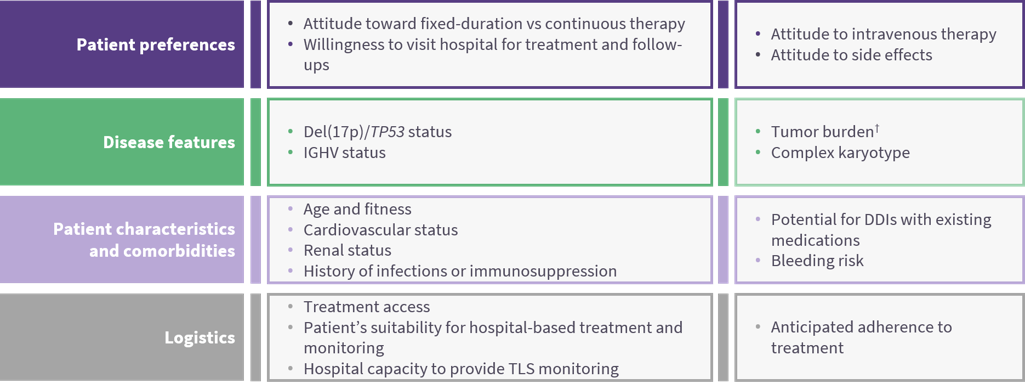
During his presentation, Awan provides an overview of the key clinical evidence for the use of Bruton’s tyrosine kinase inhibitors (BTKi) in patients with relapsed/refractory (R/R) or first-line (1L) chronic lymphocytic leukemia (CLL). He discusses the potential sequencing of therapies (Figure 1), key factors influencing treatment selection (Figure 2), and the role of continuous vs fixed-duration therapy.
Figure 1. Potential sequencing of therapies in R/R CLL*
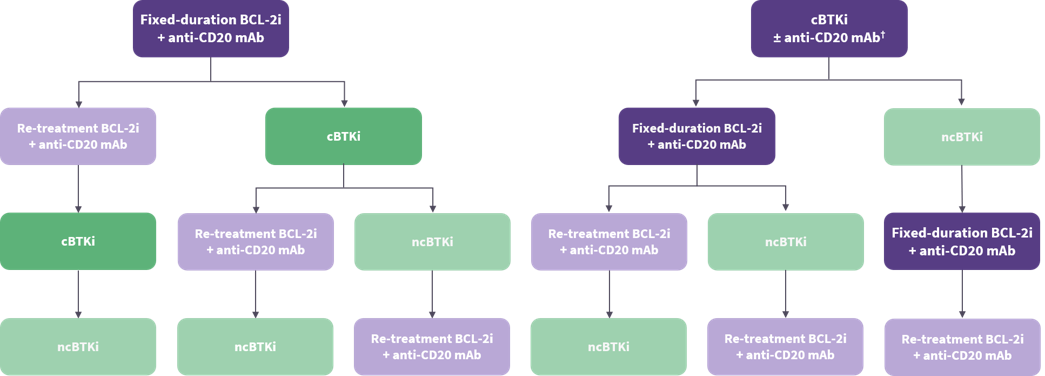
Figure 2. Factors influencing treatment selection in 1L CLL*
Key points
Relapsed/refractory CLL
The RESONATE trial (NCT0157870) provided the initial proof-of-concept for BTKi in R/R CLL; with an overall follow-up of 74 months, ibrutinib improved progression-free survival (PFS) vs ofatumumab (median PFS, 44.1 months vs 8.1 months; hazard ratio [HR], 0.148; 95% confidence interval [CI], 0.113–0.196; p < 0.001).3
A meta-analysis of 8 randomized controlled trials (N = 2,580) found that ibrutinib was associated with increased risks of both hypertension (risk ratio [RR], 2.82; 95% CI, 1.52–5.23) and atrial fibrillation (RR, 4.69; 95% CI, 2.17–7.64).4
Results from the ASCEND trial (NCT0297031) showed that acalabrutinib improved PFS vs investigator’s choice of idelalisib + rituximab (IdR) or bendamustine + rituximab (BR); after ~4 years of follow-up, median PFS was not reached (NR) with acalabrutinib vs 16.8 months with IdR/BR (HR, 0.30; 95% CI, 0.16–0.38; p < 0.001).5
In the ELEVATE-RR trial (NCT02477696), after median follow-up of 40.9 months, acalabrutinib demonstrated noninferior PFS vs ibrutinib (median PFS, 38.4 months vs 38.4 months; HR, 1.00; 95% CI, 0.79–1.27), with fewer any-grade cardiovascular toxicities (hypertension, 8.6% vs 22.8%; atrial fibrillation, 9.0% vs 15.6%).6
Results from the ALPINE trial (NCT03734016) showed that, after a median follow-up of 42.5 months, zanubrutinib improved PFS vs ibrutinib (HR, 0.68; 95% CI, 0.54–1.84) with a 36-month PFS rate of 65.4% vs 54.4%, and the overall cardiac events were lower.7
A retrospective study analyzed the characteristics and outcomes of 95 patients with CLL after BTKi and B-cell lymphoma-2 inhibitor (BCL-2i); double-refractory (DR) was defined as progressive disease during active treatment with a BTKi and a BCL2i, given sequentially or in combination, and double-exposed (DE) disease was defined as when treatment with either or both of these agents was discontinued due to reasons other than progression.8
Patients who were DR had a lower median overall survival (OS; 2.2 years vs NR; p = 0.58) and higher incidence of TP53 mutations (66.7% vs 44.6%; p = 0.046) and BTK mutations (59.1% vs 26.7%; p = 0.019) when compared with patients who were DE.8
Results from the BRUIN CLL-321 trial (NCT04666038) demonstrated that, after a median follow-up of 17.2 months, pirtobrutinib improved PFS vs investigator’s choice of IdR/BR (median PFS, 14 months vs 8.7 months; HR, 0.54; 95% CI, 0.39–0.75; p = 0.0002), with low rates of any-grade atrial fibrillation/flutter (2.6%) and hypertension (6.9%).9
During the European Hematology Association (EHA) 2026 Congress, June 11–14, 2026, Stockholm, SE, results were presented from the BRUIN CLL-322 trial (NCT04965493) comparing fixed-duration pirtobrutinib + venetoclax + rituximab (PVR) vs venetoclax + rituximab (VR).10
After a median follow-up of 27.3 months, PVR improved PFS vs VR (HR, 0.547; 95% CI, 0.400–0.748; p = 0.0001); the PFS benefit was consistent across prespecified subgroups, including patients with prior covalent BTKi exposure, those who discontinued prior covalent BTKi due to progressive disease, and patients with del(17p)/TP53 mutation.9
Overall, the safety profiles were similar, with any-grade adverse events (AEs) occurring in 99.7% of patients in the PVR arm, and 98.1% of patients in the VR arm, Grade 3 AEs occurring in 78.8% and 73.0% of patients, respectively, and treatment-related AEs (TRAEs) leading to discontinuation reported in 5.4% and 5.1% of patients, respectively.10
Emerging novel BTK-targeted therapies have shown promising initial results, including the non-covalent BTKi nemtabrutinib, the bifunctional BTKi rocbrutinib, and BTK degraders such as bexobrutideg and tacabrutideg.11–14
1L CLL
Patient preference, disease features, patient characteristics and comorbidities, and logistics are key factors to consider when selecting a 1L treatment option in patients with CLL.2
Continuous BTKi therapy has demonstrated long-term efficacy in 1L CLL:
In the RESONATE-2 trial (NCT01722487/NCT01724346), with a median follow-up of 9.6 years, median PFS was 8.9 years with ibrutinib vs 1.3 years with chlorambucil.15
In the ELEVATE-TN trial (NCT02475681), after a median follow-up of 74.5 months, median PFS was NR with acalabrutinib and acalabrutinib + obinutuzumab, vs 27.8 months with obinutuzumab + chlorambucil.16
In the SEQUOIA trial (NCT03336333), after median follow-up of 72.8 months, zanubrutinib improved PFS vs BR, with a 72-month PFS rate of 74% vs 32%.17
A real-world retrospective study of 584 patients who initiated 1L treatment with a BTKi (ibrutinib, n = 384; acalabrutinib, n = 150; zanubrutinib, n = 50) found that 65.9% of patients discontinued 1L treatment, and of these patients, 38.4% discontinued due to toxicities and 9.9% discontinued due to progression or death.18
Results from the GAIA/CLL13 trial (NCT02950051) showed that, with a median follow-up of 63.8 months, fixed-duration obinutuzumab + venetoclax (GV), particularly when combined with ibrutinib (GIV), improved PFS vs chemoimmunotherapy (CIT) or rituximab + venetoclax (RV), with 5-year PFS rates of 81.3%, 69.8%, 57.4%, and 50.7% in the GIV, GV, RV, and CIT arms, respectively.19
Results from the AMPLIFY trial (NCT03836261) demonstrated that, after a median follow-up of 40.8 months, fixed-duration acalabrutinib + venetoclax (AV) and AV + obinutuzumab (AVO) improved PFS vs fludarabine + cyclophosphamide + rituximab (FCR)/BR (AV vs FCR/VR, HR, 0.65; 95% CI, 0.49–0.87; p = 0.0038; AVO vs FCR/BR, HR, 0.42; 95% CI, 0.30–0.59; p < 0.0001), with 36-month PFS rates of 83.1%, 76.5%, and 66.5% in the AVO, AV, and FCR/BR arms, respectively.20
In the fixed-duration zanubrutinib + venetoclax arm of the SEQUOIA trial, zanubrutinib + venetoclax demonstrated encouraging PFS, irrespective of del(17p) status.21
After a median follow-up of 31.2 months, the 24-month PFS rates were 89% for patients without del(17p) and mutated TP53, and 94% for patients with del(17p) and/or mutated TP53.21
Results from the FLAIR trial (ISRCTN01844152) showed that measurable residual disease (MRD)-guided ibrutinib + venetoclax improved PFS vs FCR (5-year PFS rate, 93.9% vs 62.6%; HR, 0.15; 95% CI, 0.09–0.24; p <0.001) and suggested that MRD-guided therapy may represent an effective treatment strategy for long-term disease control.22
In the BRUIN CLL-313 trial (NCT05023980), after a median-follow up of 28.1 months, pirtobrutinib improved PFS vs BR (median PFS, NR vs 33.5 months; HR, 0.199; 95% CI, 0.107–0.367); p < 0.0001).23
The BRUIN CLL-314 trial (NCT05254743), which assessed pirtobrutinib vs ibrutinib in patients with treatment-naïve or BTKi-naïve CLL, showed that, after a median follow-up of 21.8 months, PFS with pirtobrutinib was noninferior vs ibrutinib (HR, 0.57; 0.39–0.83; p = 0.0034), with 18-month PFS rates of 86.9% vs 82.3%.24
Awan concludes by highlighting that BTKi therapies have dramatically changed the management of patients with CLL, with several viable treatment options, and that emerging evidence may further refine the optimal treatment strategies.
This educational resource is independently supported by Eli Lilly. All content is developed by SES in collaboration with an expert steering committee. Funders are allowed no influence.
References
Please indicate your level of agreement with the following statements:
The content was clear and easy to understand
The content addressed the learning objectives
The content was relevant to my practice
I will change my clinical practice as a result of this content
This content is accurate as of the date of publication and is not updated retrospectively. Please refer to the latest available evidence, guidelines, and relevant regulatory information when making clinical decisions.
More from this series:
Symposium | Optimizing treatment for chronic lymphocytic leukemia with BTK inhibitors


Your opinion matters
When selecting the next therapy for patients with R/R MCL after BTKi progression, what is your most important consideration?